
NEWS & BLOG
FAQ: Will free checked luggage soon to be a thing of the past?

Just over four years ago, then new low-cost carrier FlySafair shocked South Africans with their no frills approach to selling airline tickets without checked luggage. But the idea of airlines selling no-bag flights wasn’t new. Many European and US low-cost airlines had been doing this for years in a reported effort to keep cost down. However in recent months we’ve seen an increase in long-haul and international airlines adopting the same approach.
First it was Virgin Atlantic, aligning their luggage policy with that of partner Delta Airlines by selling no-bag flights on their Johannesburg – London route. More recently British Airways and El AL also joined their ranks and are now selling no-bag long-haul flights from South Africa.
Even traditionally generous airlines like Emirates have reduced their luggage allowance in recent months, proving that more and more airlines are trying to raise revenue by increased ancillary charges.
While the cost-saving benefit of booking a no-frills ticket could be appealing to a traveller on a short business trip or weekend break, South Africans on long-haul international flights almost always require at least one checked bag. Sadly the ancillary costs or cost of an upgrade to add or include checked luggage can make a simple mistake a costly one.
Agents who have quoted on the cheapest fare, without checking the luggage allowance beforehand, could end up having to justify or cover the price difference between a flight including a checked bag and a no-bag fee. This can range anywhere from R240 on a British Airways flight to R500 on a Virgin Atlantic flight from Johannesburg to London. These prices are subject to change and the availability of the lowest booking classes in each case.
If you’ve accidentally booked a no-bag fare, the cost implications would be even greater. Most airlines don’t allow a booking class upgrade to a fare including luggage, instead only allowing agents to later add on baggage as an ancillary service. This can end up being a costly exercise, as Virgin Atlantic charges £45 (about R850) for the first bag and £60 (about R1130) for the second bag, per flight per way. Unfortunately British Airways’ website can’t currently load the cost, but it will almost certainly be more costly than booking a fare including baggage from the start.
As more and more airlines are adopting this strategy, often with little warning, it is advisable that FlightSite Agents start taking note of each ticket’s luggage allowance before quoting. Our online system makes it easy to find this important information on each flight. On the flight results page you can find this information on each airfare, by simply clicking on the ‘Flight Details’ in blue. On the drop-down it will indicate whether checked luggage is included or not.
As airlines continue to look for ways to increase revenue, additional ancillary charges will become more appealing. It is therefore likely that we’ll see more and more airlines decrease their luggage allowance over the coming years.
US Visas: The Facts

Want to relive all your favourite US movie scenes? Then assuming you’re a South African citizen without US citizenship, you’ll likely need a US Visa in order to enter the United States of America. Please do note that the visa alone doesn’t guarantee you entry into the US, but without it you’ll be turned away. So without further delay, find all your visa answers right here.
Do you need a US Visa?
Visiting one of the 51 states of the United States of America? Chances are you’ll need a US visa.
If you’re travelling for tourism, then you’ll most likely need a B-2 Visitor visa. This visa is usually valid for 10 years and allows you to spend up to 6 months in the US. If you’re travelling for business purposes, you might need a B-1 Business visa.
Where to apply?
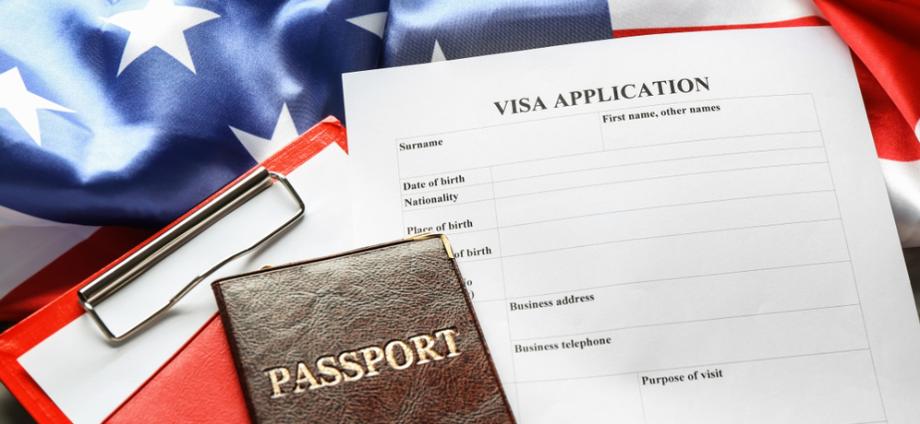
Applications are completed online and then you need to visit a US consulate for an interview and to gather your biometric details. The US Consulate in Cape Town, Johannesburg and Durban processes visa applications.
How far in advance should you apply?
You can usually apply for a visa up to 90 days before your intended departure. Visa applications can take up to 15 days to process, so you need to schedule your appointment a minimum of 15 – 16 days before your departure to take delivery time into account as well.
Be sure to schedule your appointment as soon as possible. During the busy periods it can take over a month to get an appointment at your nearest consulate.
What does it cost?
A visa application costs $160 (aprox. R2200 depending on the ROE), plus you’ll need to pay an additional R90 for delivery to your nearest DHL or R400 for delivery to you. You can pay for the application in cash or with a credit card.
What do you need in order to apply?
You will need the following to complete the DS-160 form online:
- An original South African passport that is valid for at least six months beyond your date of return. It will need at least two empty pages for the visa and entry stamps.
- The visa cost of $160 plus additional delivery fees.
- You don’t require a booked flight.
- Details of your previous international trips.
- A digital photo that meets the US requirements (this one will be used on your visa)
You will need to take all of the above and this to your appointment:
- A barcoded DS-160 confirmation page
- An appointment confirmation page (which you’ll receive via email after booking your interview).
- One colour photo that meets the U.S. Visa photo requirements.
- All passports that show previously issued visas to the United States or international trips.
- Any supporting documents, such as bank statements, invitation letters, letter of employment etc.
- A marriage certificate for an accompanying spouse.
- An unabridged birth certificate for accompanying minors.
Application Process
- Complete the online application form (D-160) and pay the amount in order to schedule your visa appointment.
- Print your confirmation form (the one with the barcode) and schedule your visa interview at your nearest consulate.
- Gather all your documents, most importantly your passport and confirmation form, and head to your visa appointment.
- You’ll receive SMS notification when your visa has been processed and is on it’s way to either your DHL office or yourself.
Visa appointment
- Plan to arrive about 10 – 5 minutes early. If you’re late and you might have to reschedule and if you’re too early they might send you away.
- The US Consulates are very security aware and therefore they don’t offer public parking near their offices. Luckily we’ve rounded up all the best parking options for each consulate.<
In Cape Town, you can make use of parking at the Steenberg Village shopping centre (and treat yourself to a Vovo Telo pastry). It is roughly a 5 minute walk down a quiet street to the consulate.
In Johannesburg, visa applicants can make use of the secure parking offered at Sandton City Shopping Mall. You’ll only have to walk for about 10 minutes to the consulate.
In Durban, visa applicants can choose between the paid parking options at the Royal Hotel, Workshop Shopping Center and Pine Parkade. The walk to the consulate will only take you 5-7 minutes depending on where you park.
Each city also provides public transport, but as you can’t take any electronics with you the the consulate it is best to have your own secure vehicle to lock up your cell phone and so forth should you need it with you.
- Don’t even try to take your phone, laptop or any electronic device with you, unless you are happy for the US Consulate to keep it safe for you during your appointment.
- Be ready to answer questions regarding the purpose of your visit, who you’re travelling with, how you’re funding your trip and how long you’ll stay.
- Most likely you won’t need to provide any supporting documents, but rather have them with you than risk having to reschedule your appointment. If you’re travelling with a spouse, then be sure to have their documents as well.
The best part about a US visa?
Unlike a Schengen visa and UK visa which needs to be applied for every visit, a standard Visitors US visa is valid for ten years.
#US VISA APPLICATION, #USA, #VISA

Credit card fraud is one of the biggest threats facing both big and small online businesses. This is an even bigger issue for the travel industry due to the nature of the products being sold. At FlightSiteAgent we aim to assist in all aspects of running your travel business by providing valuable and relevant information. Whilst credit card fraud can take many shapes and forms, there are a few key factors that could help you identify a fraudulent transaction and ways to avoid participating in such a transaction.
Identify Fraudulent Travellers & Agents
Online fraud has come a long way in the last twenty years. Gone are the days of Nigerian princes, today’s fraudsters are experienced, proficient in English and have learnt from past mistakes. They are better, but still not always good enough to avoid detection by the keen eye.
Fraudulent travellers will usually use email as their first, and possibly only, method of communication. This is one of the biggest advantages we have, as it gives us time to evaluate every aspect of their communication and how they present themselves.
Approach enquiries from new clients with suspicion, especially ones asking about accepted credit cards or which airlines you can issue first. Whilst in itself harmless, this isn’t usually a traveller’s first concern. It is only natural for a traveller to request a quote first and follow up with payment queries once they’ve decided to continue with the booking.
Next up, it is worth taking a closer look at all the details provided in the email and not only the information typed by the client. Compare the hosting country of the email address, the language used, any addresses provided and the departure city of flights requested. In many cases some or all of the above information won’t match.
See the example below, where the email address is hosted in France, the language is English, the address provided is in England and the eventual departure city was Cairo. This definitely warrants further investigation and caution if you decide to continue with the booking.
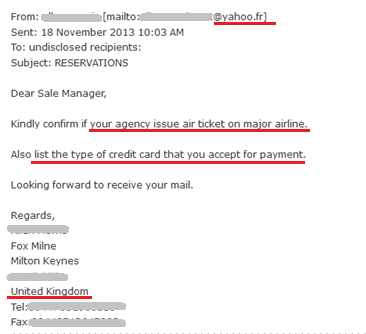
Besides the country denoted by the use of .uk (United Kingdom), .fr (France), .it (Italy), .au (Australia) instead of .com in the email address, you can also tell a lot from the company used to host their email. Few legitimate companies will use a generic ‘@yahoo.com’ or ‘@gmail.com’ email address when they have access to personalised email hosting.
Over 90% of the fraudulent bookings we receive are for departure or arrival in Africa and often for travel in Africa. Paired with any of the other fraud indicators, we advise you continue with caution.
Lastly we’d advise against making last-minute bookings, especially for new clients, without sufficient reason being provided by the client. Fraudulent travellers like doing this to reduce the risk of being caught before they are able to travel on the ticket. Other travellers usually have a very good reason for making a last minute booking, as it is inconvenient and costly.
One of the latest techniques fraudsters are employing is approaching a smaller agent to issue on their behalf on the pretence of them also being a travel agent. No legitimate travel agency will ever contact you to issue on their behalf. This is often done by fraudulent travellers as a way to by-pass rigorous fraud checks by bigger travel companies like FlightSiteAgent. Payment will often be made with stolen credit card details, frequently international cards and most often for travel from Nigeria although not exclusively. If you suspect that you have been targeted by a fraudulent agent, please contact us for further guidance on how to proceed safely.
Whilst the above certainly covers some of the most common behaviour of fraudsters, they are constantly improving their techniques and changing their models. In order to stay up to date with the latest developments, you need to educate yourself. Sign up to fraud alerts (this fraud alert website can be useful) and keep an eye on traveller publications like TNW who often share stories to help agents keep up with the latest trends.
Safety Measures
Unfortunately there is no sure-fire way to determine whether a booking is fraudulent beforehand, but that doesn’t mean that you have to refuse any booking that meets any of the above criteria.
The best thing to do in a case of suspected fraud is to pick up the phone and speak to your client. Ask why they need to travel on such short notice, why they aren’t travelling from the country they are supposedly residing in or anything else that doesn’t sit well with you. If your client’s answers doesn’t put you at ease, you have to trust your gut. The risk of committing fraud is too great.
Don’t ever send a client suspected of fraud a credit card link. The EFT payment option provided by FlightSiteAgent is a great alternative to card payment as it provides protection against credit card fraud. This means you don’t have to send a potential client away, but you’re also not taking any risks. Lie if you have to about not being able to take credit card payments, but don’t put yourself at risk.
Whilst not standard for FlightSiteAgents due to the use of the card link, you do have another option if you are in possession the card details. Phone the bank and check the travellers name against the card number to find out whether that person is the card holder. There are of course legitimate circumstances for a discrepancy, but it could help you uncover potential fraud.
What Happens If You Are Part of a Fraudulent Transaction?
Fraud is a serious crime, and whether you acted in good faith or not, you risk being implicated in a criminal case and might face charges depending on the situation.
If the fraud victim decides to request a charge-back from their bank, which most do, then FlightSiteAgent will hold the agent liable for any money that we are out of pocket. This will likely be the case if the client has already flown or a non-refundable ticket was booked.
So take fraud seriously, act on your suspicions and don’t fall victim to a fraudster looking to travel on someone else’s dime otherwise you might be the one that ends up picking up the tab.
#CARD FRAUD, #CREDIT CARD,# CRIMINAL, #FRAUD, #ONLINE FRAUD, #RISK
FAQ: Why Do Airfares Change?

One of the most frustrating aspects of being a travel agent is how frequently airfares change. Often by the time your client gets back to you on a quote the airfare might already have changed.
As an agent there are two ways to protect yourself against price changes – by placing the booking on hold for 24 hours (blocked bookings) and by advising clients that all prices are subject to change and availability. Please do note that a blocked booking does not mean that an airfare can’t change, but it does offer some limited protection.
The best you can do as a travel agent is to arm your client with the necessary information and allow them to take on the risk of the airfare changing if they can’t confirm the booking immediately. If presented at the right time, this could also be the motivation your client needs to make the booking today rather than later.
“Why do flight prices change from day to day?”
Unfortunately there is no single answer to this question as there are multiple possibilities. Below we explore some of the most likely causes for changes in airfares.
Availability
When we say that fares are subject to availability, we are not only referring to availability in the same cabin class but also in the same booking class. As availability in the latter is significantly more limited, it is important to impress the difference between the two on your client.
To explain booking classes simply, airlines divide each cabin class (e.g. Economy class) further into booking classes (e.g. O class) and allocates different fare rules and benefits to each. You can learn more about booking classes here.
Essentially there is a limited number of seats available in each booking class. Generally the higher the booking class, the more expensive the flight will be.
Sales
In the case of an airline sale, the airline might choose to release lower classes at a lower fare. Tickets bought on sale usually have very restrictive fare rules.
Currency Fluctuations (Fare Alignment)
Some airlines charge their base fares in their local currency making the airfares subject to the exchange rate. When booking these airfares through a GDS, the GDS will do the conversion but not as often as the exchange rate changes. When the airline updates their airfares in the GDS to reflect the latest exchange rate we refer to it as a fare alignment.
Airport Taxes
On FlightSiteAgent it is possible to see a breakdown of the airfare, which would list the base fare, taxes and transaction fee that you set (see example below).
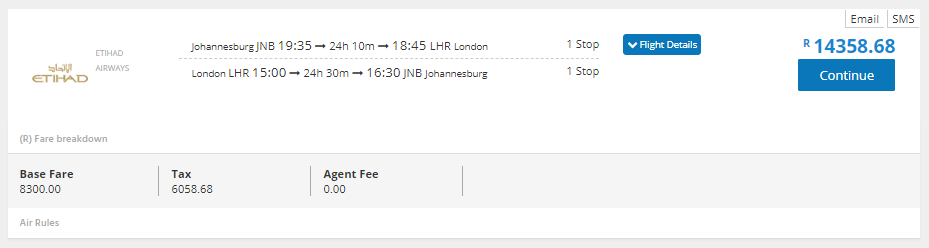
The term “tax” might refer to a number of additional fees, like fuel surcharges, VAT and arrival and departure taxes. Although it is possible for airport taxes to change at any time, airlines traditionally update their fares on Monday and Tuesday nights. This is one of the main reasons bookings placed on hold automatically cancels every evening.
Now you understand why flight prices are always subject to change and availability.
#AIRFARE #AIRLINE SALES #AIRPORT TAXES #AVAILABILITY #BLOCKED BOOKINGS #BOOKING CLASSES #CHANGES #CURRENCY FLUCTUATIONS #FARE ALIGNMENT #PRICES

UPDATE: Don’t get too excited yet, but on the 20th of November 2018 the Spanish Supreme Court ruled that an airline can’t cancel your ticket if you miss a flight! Often called travelling out of sequence, the court ruled that a passenger can travel on all or only some sectors of a flight ticket. This is considered a massive win for passengers and travel agents who have long been left at the mercy of airlines. But don’t recommend that travellers use a ticket out of sequence any time soon, as this ruling hasn’t resulted in an official Iberian policy change yet and definitely isn’t applicable on other airlines. So all the reasons for not travelling out of sequence, as set out below, are still applicable. It might take a while, if ever, for other airlines to start changing their policies in accordance. Courts in other countries could also rule differently, although this case does set a positive precedent.
With the prospects of a New Year looming, we thought now is as good a time as ever to shake things up a little! We’re introducing a new blog series to ensure that the content we’re creating is always fresh and relevant to you – our travel agents. With various degrees of experience in the industry, ensuring we’re catering to all of your needs it our top priority. So whether you’re new to the industry or consider yourself an industry vet, we hope you’ll enjoy and possibly learn something from our new monthly series where we answer questions that only a travel agent would have an answer to.
To kick off the series, we’re starting with one of the most frequently asked questions. Explaining this can be a little tricky, so we hope our detailed answer will help you satisfy all your client questions regarding this subject.
“Why are direct flights so expensive? Can’t I just skip out on my connecting flight, thus converting a stop-over flight into a direct flight?”
Direct flights are considered a premium airline service and due to the convenience of a shorter travel time they are in high demand. Unfortunately when flights are in high demand, the airfare increases. Saving all that time is a luxury and often travellers will be willing to spend a little bit more for the added convenience!
But what if you wanted to, for example, travel to Dubai with Emirates and taking an Emirates flight to Rome works out slightly cheaper than taking a direct Emirates flight to Dubai. Could you skip out on the connecting flight to Rome and spend all your time in Dubai?
Unfortunately airlines have wised up and will not allow this exploit. The moment a passenger misses a flight, they will cancel all the other flight sectors on the same ticket as the presumption is that the passenger no longer requires these flights. So in the example above, the passenger would be stranded in Dubai with no return flight.
This is why it is so problematic should a passenger miss a connecting flight. Airlines have very strict rules as to when they can endorse the rest of the sectors and they will likely require the passenger to book another flight to the final destination, at the travellers cost. Once flights have been cancelled, it becomes an even greater challenge to get them reinstated and in some cases it might not even be possible.
So in short, skipping out on a connecting might cost you more with the added risk of not being able to catch a return flight on your chosen date.
Should you have any other questions that we can help you answer, please pop them in the comment section below this post. You might see it answered in a future edition of this series!
#CONNECTING FLIGHT #DIRECT FLIGHT #FLIGHT PRICES #FLIGHTS #SAVINGS